

Your Plus Size Tummy Tuck Journey Revealed!

your

PLUS SIZE TUMMY TUCK IN MIAMI

journey revealed

Discover the benefits of a high BMI tummy tuck, perfect for targeting stubborn areas.

Dr. Nick Masri from High BMI, an expert in plus size plastic surgery
Written by Dr. Nick Masri, Expert for Tummy Tucks

Over the last 20+ years, Dr. Masri performed various tummy tucks, wrote many articles, and shared tips about plus-size surgery procedures.
MORE ABOUT NICK...

Dr. Nick Masri from High BMI, an expert in plus size plastic surgery

Written by Dr. Nick Masri, the Best Plus Size Tummy Tuck Surgeon

Dr. Masri is an expert plastic surgeon with over 20 years of experience operating on high BMI patients.
MORE ABOUT NICK

Watch this page content in short videos
THIS SECTION VIDEO
Body contouring surgery, like a plus size tummy tuck, can be safely done on overweight individuals provided there is overall good health, weight stability, and abdominal anatomy. Attention to patient selection, surgical preparation, and the hospital safety parameters, with disciplined post-operative recovery, is the key to success. As such, the patient needs to be well informed of the increased risk of post-surgical complications to wound healing, swelling, fluid collections, and blood clots with higher BMI.

BMI CALCULATOR

ft
in
lbs
cm
kg

When patients come into my office asking about a plus size tummy tuck, they are usually carrying more frustration than most people realize. Many have spent years trying to improve the appearance of their abdomen through diet, exercise, or weight loss, only to find that the heaviness, skin descent, or lower abdominal overhang never truly changes. 

Some patients develop loose tissue after pregnancy. Others experience major weight fluctuations that permanently stretch the abdominal wall and alter how the lower abdomen changes the contour of the waistline. 

By the time many patients sit down for a consultation, they already assume they are disqualified because of their BMI. I hear that concern almost every day. One of the biggest misconceptions online is the idea that being overweight automatically means someone cannot safely undergo a plus size tummy tuck

In reality, surgical candidacy is far more complex than a single number on the scale. If I am considering a higher BMI patient, I’m looking at where the fat is located, whether it is predominantly above the muscle or deeper around the abdominal organs (visceral fat), how the tissues will react, how the skin will tolerate tension, and whether the abdomen is likely to heal predictably after surgery.

The ultimate goal is to enhance contour while maintaining blood supply, reducing closure tension, and achieving a natural look years after. 

What is a Plus Size Tummy Tuck

People use different terms for this, plus-size tummy tuck, high BMI abdominoplasty, and overweight tummy tuck. All of them are talking about the same procedure, but the label is not as important as the procedure for someone in your situation.

In essence, a tummy tuck eliminates excess skin and fat from the abdomen. However, “skin removal” doesn’t do justice to the actual procedure. The abdomen for plus size patients is not a standalone part. The bottom of the abdomen is connected to the pubic region, the groin crease, and the hips. Tissue falls and piles over the course of a pregnancy, weight gain or weight loss, or simply years of gravity, impacting the overall silhouette of the entire lower body area.

Woman with cinched waist after plus size tummy tuck by High BMI
Individuals with a higher BMI, stubborn fat, and excess abdominal skin can benefit from a plus size tummy tuck.

What surgery addresses is that full picture. Separated abdominal muscles are repaired and tightened, creating what I often describe to patients as an internal corset, a structural support that changes not just how the abdomen looks, but how it functions. The belly button is repositioned. The hips and flanks are shaped. Skin is removed, yes, but the goal is contour, an outcome that reflects the patient’s natural proportions rather than simply a flatter version of what was there before.

For many plus size patients, the health case for this procedure is just as compelling as the cosmetic one. Chronic skin fold irritation, recurring rashes, hygiene difficulties, and back pain worsened by the weight of a descended abdominal panel are daily quality-of-life issues that surgery can genuinely resolve. That part of the conversation doesn’t get nearly enough attention online, and I think it should.

Each surgery plan that I design is suited for the individual patient, the type of tissue that they have, the weight distribution, their past surgical experiences, and their objectives. There is no set pattern for this process.

The anatomy tells me what's possible, the patient tells me what is important to them.

The Mandatory Steps Before Your Plus Size Tummy Tuck Journey

THIS SECTION VIDEO

Most patients who come to me have already been thinking about this for a long time. They’ve done some research. They have questions. Some have already had a bad consultation somewhere else. The pre-surgical procedure that I take patients through is not bureaucratic; it is there for a reason: the choices we make before surgery impact what happens during and after surgery.

1. Start with Real Education, Not Just Inspiration:

There’s no shortage of before-and-after photos online, and I understand why patients gravitate toward them. That sets the foundation for all future conversations you have with a surgeon after you view the results, which includes the surgical procedure, recovery demands, and risks associated with that procedure, with your specific BMI and health profile.¹ That foundation changes the quality of every conversation you have with a surgeon afterward.

2. Look at the Pictures That Depict Your Situation:

If you do look at before/after galleries, look for ones that are truly before and after and not just one of many. A dramatic outcome for someone with a lower BMI is not a good indicator of what you’ll get. Find cases that are similar in anatomy, BMI range, area of concern, and skin quality. Request the surgeon to provide examples of patients with a similar condition.

3. Choose a Surgeon You Trust, Not Just One You Found:

Credentials are the starting point, not the finish line. In addition to board certification and surgical volume, the most important thing to consider is whether or not you feel comfortable with this person. Are they able to think of questions that are difficult to answer? Are they truthful in their responses, even if the response is not the one you want to hear? The surgeon-patient relationship in a recovery that spans months is not a transaction; it’s a partnership. Choose accordingly.

4. Use the Consultation as a Working Session:

consultation is not a sales pitch, and it shouldn’t feel like one. Bring written questions to ask. Be specific when asking about post-surgical care instead of just asking “how long is recovery” and ask more about the drain management at home, “when will I be able to drive, when can I go back to work, what will it look like at home?” Inquire about complications and what is done to manage them.

5. The medical evaluation is where candidacy is actually determined:

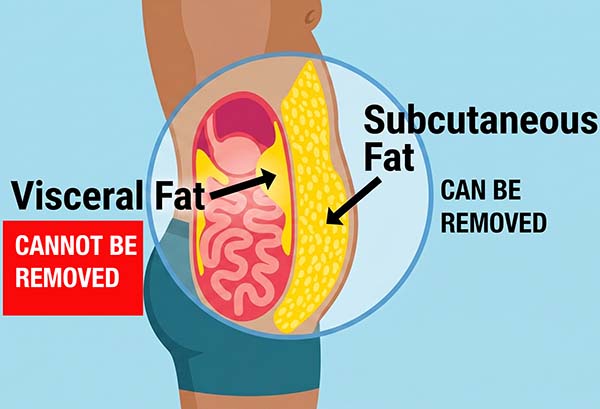
Once you’re moving forward with a surgeon, a thorough medical evaluation follows. This is where I review a patient’s full medical and surgical history, medications, allergies, social habits including tobacco, vaping, and alcohol use, recent hospitalizations, and family history of clotting or bleeding disorders. The physical examination covers skin elasticity, subcutaneous versus visceral fat distribution, the degree of muscle separation, existing scars, and any hernias that may need to be addressed during the procedure.

visceral vs subcutaneous illustration
One thing I want patients to understand about this evaluation: the visceral fat assessment matters more than most people realize. The deeper fat around the abdominal organs (visceral fat) cannot be removed while undergoing tummy tuck surgery. If it is the predominant cause of abdominal bulge, the patient must be aware of this prior to surgery and not after. I talk about that in each evaluation as part of the conversation about realistic expectations; patient satisfaction goes hand in hand.

Why Higher BMI Increases Certain Surgical Risks for an Overweight Plus Size Tummy Tuck?

Patients searching for “BMI limit for tummy tuck” or “body mass index requirements for abdominoplasty” deserve honest conversations about the risks associated with elevated BMI. The risks associated with a tummy tuck may be higher with a higher BMI, such as slow healing of the incision, infection, fluid buildup, blood clots, anesthesia complications, and stress on the tummy tuck incision during recovery. These risks are not an absolute contraindication to surgery, but they do need to be taken into careful consideration when selecting patients, planning surgery, and providing special care after surgery to ensure a safe result. 

Dr. Masri performing plus size tummy tuck
Dr. Nick Masri performs plus size Tummy Tuck

Hospital Stay and Surgical Safety for My Plus Size Tummy Tuck Patients

Now your Post-Op journey starts...
High BMI patient happy with results of plus size tummy tuck
THIS SECTION VIDEO

Patients who receive a plus size tummy tuck will generally be monitored in the hospital for a minimum of 23 hours to make sure they’re safe to recover from their surgery during the most critical period. This enables regular assessment of vital signs, good pain control, control of nausea, early assistance with walking to minimize the risk of a clot, and management of fluid and breathing after anesthesia. 

Recovery From a Plus Size Tummy Tuck: What the Timeline Actually Looks Like?

THIS SECTION VIDEO

Recovering from a tummy tuck for plus size people is a gradual process that takes several months. The early phase includes rest, light walking, and protection of the surgical repair; most patients return to their normal daily activities within a few weeks. In patients with higher BMI, swelling may last longer, and contouring becomes more apparent over time. Healing will take a year or longer, so patience is key as scars mature.

Combining other procedures plus size tummy tuck by High BMI with other procedures

Who May Be a Good Candidate for a Plus Size Tummy Tuck?

THIS SECTION VIDEO

Many patients assume surgeons automatically reject anyone with an elevated BMI. That is not necessarily true.

I have operated on higher-BMI patients when their overall health profile, mobility, and tissue quality suggested surgery could be performed safely. In some cases, a patient with a moderately elevated BMI but stable health may actually be a safer candidate than someone with a lower BMI who smokes or has poorly controlled diabetes.

Potentially favorable candidates may include:

  • Patients with a stable weight for several months
  • Individuals after significant weight loss
  • Women with stretched abdominal tissue after pregnancy
  • Patients experiencing skin fold irritation or hygiene difficulties
  • Individuals with abdominal muscle separation
  • Patients with good cardiovascular health and mobility
  • Non-smokers or patients willing to stop smoking before surgery

At the same time, I believe expectation management is extremely important.

A tummy tuck is not a weight-loss procedure. If a patient has a significant amount of fat below the abdominal muscles, they may still have a protruding abdomen after the procedure, as this visceral fat cannot be removed during tummy tucks.

So during the consultation, I openly discuss this as realistic expectations are one of the most important aspects of patient satisfaction.

Doctor Nick Masri, the best plus size tummy tuck surgeon in Miami

The Bottom Line

When patients come to me asking about a plus size tummy tuck, my focus is never just on the number on the scale. I look at the entire picture, including anatomy, skin quality, tissue weight distribution, weight stability, and the body’s ability to heal safely after surgery.
The results are best when patients have realistic expectations prior to surgery, remain patient through the recovery process, and take a holistic perspective on maintaining their general well-being.

FAQ Frequently Asked Questions

What is the safe BMI to have for a tummy tuck if you are plus sized?

Surgical candidacy for a tummy tuck is dependent on many anatomical and medical factors, suggesting there is no set BMI threshold for overweight tummy tucks. Before deciding whether or not surgery is safe, I evaluate the patient’s anatomy, overall health, smoking history, and their ability to heal.

What is the difference between a plus size tummy tuck and a regular tummy tuck?

A tummy tuck that’s performed on a plus size patient will likely have more of each of these factors than a tummy tuck that is performed on a non-plus size patient. The placement of incision, undermining, compression, and postoperative care may be altered based on the distribution of weight and tolerance of tension of the tissue.

What to expect in the recovery process?

Recovery from a tummy tuck for plus size patients usually consists of swelling, a tightened tummy, and limited mobility for several weeks post-surgery, and planning for recovery. During the healing phase, it is important that patients wear compression garments, walking support, limit lifting, and monitor the incisions.

If you are looking for a plastic surgeon who specializes in working with plus size individuals, we have you covered. Our board-certified experts provide exceptional care and help you achieve your desired goals. Contact us today to schedule a consultation.