

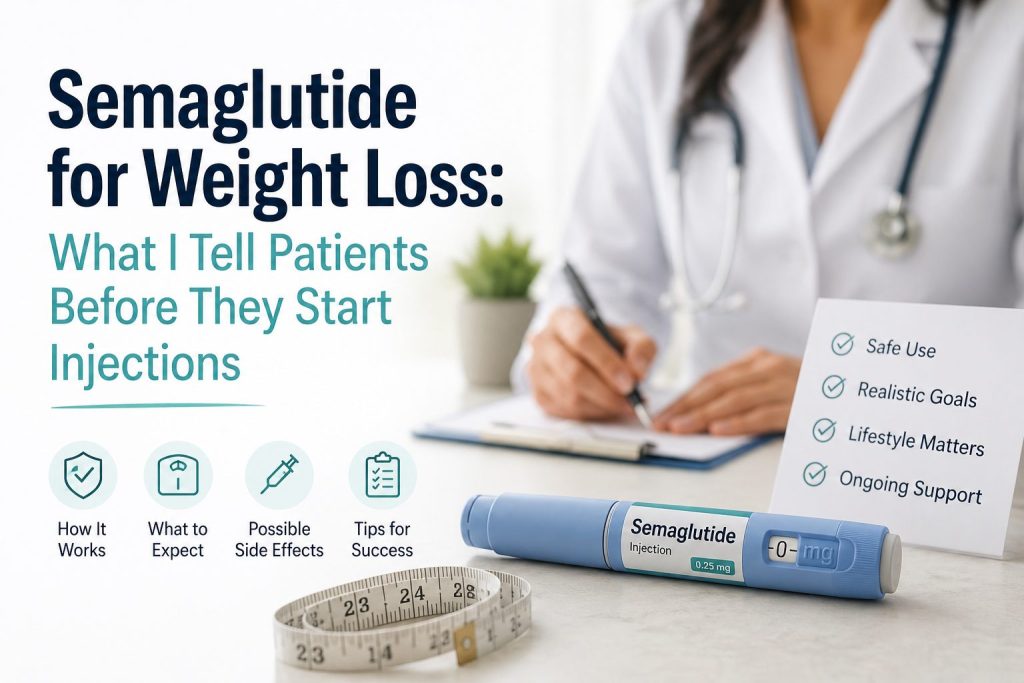
This conversation comes up almost every day. Patients come into my office and say: “Doctor, everybody is taking Ozempic. Should I start?”
Some patients have already lost twenty or thirty pounds. Others want to know whether semaglutide weight loss means they can avoid surgery entirely. Others arrive frustrated because they succeeded at losing weight, but do not recognize the body they expected to have afterward. The excitement around semaglutide is understandable.
Weight-loss medications have changed obesity treatment in ways we did not see even ten years ago. Clinical studies have shown meaningful weight reduction outcomes, and I have personally seen patients improve their overall health and become safer candidates for surgery after medically supervised weight loss.1
But one misconception continues to create confusion. People assume weight loss and body reshaping are the same thing. They are not.
Before starting injections, I think patients should understand what semaglutide actually does, what it does not do, and why plastic surgeons have become increasingly involved in these discussions. Because changing metabolism and changing anatomy are two different goals.
What Exactly Is Semaglutide?
Semaglutide is in a group of drugs called glucagon-like peptide-1 receptor agonists (GLP-1 receptor agonists). It was originally developed for diabetes management and later became recognized for its ability to produce significant weight loss through several physiologic mechanisms.1
Its effects include decreasing appetite signaling, slowing gastric emptying, improving metabolic regulation, lowering caloric intake, and supporting blood sugar control. Most patients simply do not feel hungry as they once did.
As a surgeon, however, there is more to the story than just reduction in appetite. What I am interested in is what happens to the body when the weight is removed. In patients who lose weight successfully, I often see improvements in mobility, exercise tolerance, blood pressure, hemoglobin A1c, insulin resistance, and overall operative readiness. Those changes matter. Healthier patients generally tolerate procedures better and recover more predictably.
Semaglutide Is Not Liposuction
This is one of the most important distinctions I explain in consultation. Semaglutide reduces body fat through systemic weight loss. Liposuction removes localized fat deposits. Those are completely different processes.
Patients sometimes expect injections to flatten the abdomen, lift tissue, or restore body shape after major weight loss. That is not how these medications work. Semaglutide does not tighten stretched abdominal skin, repair abdominal muscle separation, remove stretch marks, lift descended breast tissue, restore skin elasticity, or correct hanging tissue folds.1
Weight loss reduces volume. Surgery changes support and contour. The goals do not overlap; they are not synonymous. As the skin becomes stretched over the years due to obesity, pregnancy, or frequent weight changes, it is not always possible to return it to its normal position through weight loss alone.
The difference is crucial later on when patients start contemplating body contouring.
The Biggest Misconception About Semaglutide and Weight Loss
This is probably the pattern I hear most often: take the injections, lose the weight, stop treatment, move on.
A lot of patients think that taking semaglutide is just a short-term measure. However, obesity is more of a chronic condition than a short-term project. Research has demonstrated that long-term lifestyle changes and management after treatment are necessary to maintain results.2
This is why my consultations do not linger on the scale. I want to know how long the weight has been fluctuating, what their eating habits are like on a daily basis, whether they have adequate protein intake, how physically active they are, if they have had any previous bariatric procedures, and most importantly whether the weight has stabilized. Those answers tell me far more than BMI alone.
Surgery does not happen in isolation. The body arrives in the operating room carrying the history of how weight was gained and how it was lost.
Why I Started Talking About Semaglutide More in Plastic Surgery Consultations
Many patients are surprised when I ask about their weight-loss regimen before discussing surgery. Not because semaglutide changes the operation itself, but because it changes the tissues I operate on.
I have observed an increase in patients coming in with significant weight loss over the last couple of years using GLP-1s. Most are in better health — lower hypertension, improved mobility, and reduced risk for anesthesia complications. Those benefits are noteworthy. But weight loss changes volume, not tissue support.1
With patients who have lost weight, I ask myself whether surgery is occurring at the proper time. Semaglutide is not meant to be a substitute for surgery, but rather to enhance the safety and predictability of surgery.
Who Is a Good Candidate for Semaglutide?
Before patients ask whether surgery is right for them, they typically ask first whether semaglutide is right. I do not treat this as a cosmetic decision. I treat it as a medical decision.
Generally, patients who may benefit are those who have obesity or excess body weight, have struggled to achieve meaningful progress with lifestyle changes alone, are medically stable, have realistic expectations, and are prepared for long-term behavioral change.1
But candidacy is not simply about qualifying. I also look carefully at situations that deserve additional evaluation, including prior pancreatitis, gallbladder disease, significant gastrointestinal symptoms, certain endocrine conditions, and complex metabolic history.
These medications influence appetite, digestion, and metabolic regulation. That deserves medical supervision. I tell patients not to think of semaglutide as a cosmetic shortcut. Think of it as one tool inside a larger long-term plan.
Rapid Weight Loss Creates a Different Surgical Conversation
Patients naturally focus on speed. Surgeons think differently. When weight comes off quickly, I am evaluating much more than fat loss — tissue thickness, skin recoil, muscle preservation, nutritional reserve, and areas under mechanical stress.2
One of the most common misunderstandings I see is assuming all body regions respond equally. They do not. The abdomen could be flattened but there may still be residual weight at the lower end. Before the skin can adjust to the loss of support and volume, it can start to sag. This is important because the body’s reaction plays a crucial role in body contouring surgery, not just the number of pounds lost.
A smaller body is not automatically a body that is ready for surgery. I prefer seeing consistency — stable tissue, stable habits, stable nutrition. That usually leads to safer healing and more predictable results.
Why Some Patients Still Need Surgery After Successful Semaglutide Weight Loss
This is one of the most common questions I hear: “If the medication worked… why do I still need surgery?”
Because the medication did work — the body changed. Now we are evaluating what remains. Semaglutide reduces fat. Body contouring addresses the tissue that no longer supports the new shape. That distinction matters.1
Patients often expect surgery to be about removing skin. That is not how I think about it. I think about support, tissue position, and how one region affects another. Removing excess skin and residual fat while repositioning sagging tissues after weight loss helps reveal the body’s underlying contours — changes that often cannot be accomplished without surgery.
Depending on anatomy and goals, body contouring options may include abdominoplasty (plus size tummy tuck), breast lift procedures, arm contouring, thigh contouring, and lower body contouring procedures. But I do not select procedures as isolated checkboxes. I plan around where support has been lost and whether correcting one region will influence another. The goal is balanced shape, durable healing, and results that remain stable over time.
The Protein Problem Patients Rarely Expect
One of the most practical issues I discuss with patients on semaglutide has nothing to do with injections. It is protein intake. Because appetite often decreases significantly, patients sometimes unintentionally under-eat. That creates a problem.
Protein supports healing, collagen formation, immune response, muscle preservation, and tissue recovery.2 Patients are often surprised when I spend as much time discussing nutrition as surgery. But healing begins long before entering the operating room. Some patients become smaller while simultaneously becoming nutritionally depleted. That is not the outcome I want. The goal is not less food. The goal is better recovery capacity.
The “Ozempic Face” Conversation
Patients ask about this constantly. Many worry that the medication damages facial tissues. What patients notice is usually the effect of rapid volume reduction. Facial fat contributes to support. When body fat decreases, facial contours may change too.
Patients sometimes notice hollow cheeks, more visible folds, early jowling, neck laxity, and loss of facial fullness. This pattern is not unique to semaglutide weight loss — I have seen the same changes after bariatric surgery and other forms of major weight loss.1 The medication itself is not aging the face. Acknowledging that difference helps patients have proper expectations and understand this is a normal consequence of weight loss, not a damaging side effect of the medication.
What Are the Implications of Semaglutide on the Safety of Plastic Surgery Patients?
This has become a much bigger discussion in recent years. Semaglutide slows gastric emptying.2 That matters because stomach contents can influence anesthesia planning. This does not automatically mean patients must stop medication — but it does mean timing should be individualized.
The discussion may include current dosing schedule, gastrointestinal symptoms, type of surgery planned, overall medical history, and coordination with anesthesia providers. I tell patients not to make medication decisions independently before surgery. Good planning happens when the prescribing physician, anesthesia team, and surgeon communicate.
What Risks Should Patients Understand?
Like any medical therapy, semaglutide weight loss has considerations patients should discuss with their provider.1,2
Gastrointestinal Symptoms
These include nausea, vomiting, constipation, and diarrhea.
Gallbladder Concerns
Rapid weight loss can increase the likelihood of gallstone formation in some patients.
Nutritional Challenges
Reduced intake may create difficulty maintaining adequate protein and micronutrient levels.
Muscle Loss
Losing weight too quickly can affect lean body mass.
Surgical Timing Concerns
Delayed gastric emptying may influence perioperative planning. No medication should replace individualized medical evaluation.
My Perspective on Semaglutide as a Plastic Surgeon
Semaglutide weight loss has changed weight management. I have seen patients improve diabetes control, reduce operative risk, and become candidates for procedures that previously would not have been appropriate. That is meaningful.1
But I also think expectations should stay grounded. Weight loss and body reshaping are different processes. One changes metabolism. The other changes anatomy. The best results are typically obtained when these approaches are combined, rather than one taking the place of the other.
Patients who are considering tummy tuck surgery, breast lift surgery, arm lift surgery, thigh lift surgery, and post-weight loss body contouring in South Florida can expect a comprehensive approach that incorporates medical weight management, decades of surgical experience, and a dedication to natural, long-lasting results.
My goal is never simply to make somebody smaller. My goal is to help patients become healthier, operate at the right time, and create results that their tissues can realistically support long-term.
Frequently Asked Questions
Can semaglutide tighten loose skin after weight loss?
No. Semaglutide does not tighten skin or restore elasticity lost to stretching. Patients who lose a significant amount of weight may be left with excess skin around the abdomen, breasts, arms, thighs, or lower body. Many of these concerns may require surgical body contouring procedures.1
How much weight can patients lose with semaglutide injections?
Clinical trials have shown that, with lifestyle changes and continued medical oversight, semaglutide leads to average weight loss of about 15% of body weight. Results vary depending on the person’s diet, exercise routine, metabolism, and treatment compliance.1,2
Is it safe to stop taking semaglutide prior to surgery?
Possibly. Semaglutide slows gastric emptying, and physicians may recommend stopping the medication before elective surgery to decrease the risk of aspiration. The duration will vary according to the patient’s condition, symptoms, and dosing regimen. Any decisions should be made in consultation with the surgeon, anesthesiologist, and prescribing physician.2
Is semaglutide a permanent solution for obesity?
Obesity is considered a chronic disease, and long-term success requires ongoing lifestyle modification, nutritional support, exercise, and medical management. Many patients regain weight after discontinuing treatment if healthy habits are not maintained. Sustainable body transformation depends on consistency rather than temporary interventions.2
References (AMA Style)
- Wilding JPH, Batterham RL, Calanna S, et al. Once-weekly semaglutide in adults with overweight or obesity. N Engl J Med. 2021;384(11):989–1002. doi:10.1056/NEJMoa2032183. https://www.nejm.org/doi/full/10.1056/NEJMoa2032183
- Rubino DM, Greenway FL, Khalid U, et al. Effect of weekly subcutaneous semaglutide vs placebo as an adjunct to intensive behavioral therapy on body weight in adults with overweight or obesity: the STEP 3 randomized clinical trial. JAMA. 2021;325(14):1403–1413. doi:10.1001/jama.2021.1831. https://jamanetwork.com/journals/jama/fullarticle/2777024